
Electra Therapeutics (ETRA) Targets $325 Million IPO to Advance Precision Immunology Pipeline
 Eric Friedman
Pivotal-stage biotechnology company is seeking a valuation of approximately $916.5 million as lead candidate ipsoprubart advances through a registrational trial for a life-threatening immune disorder.

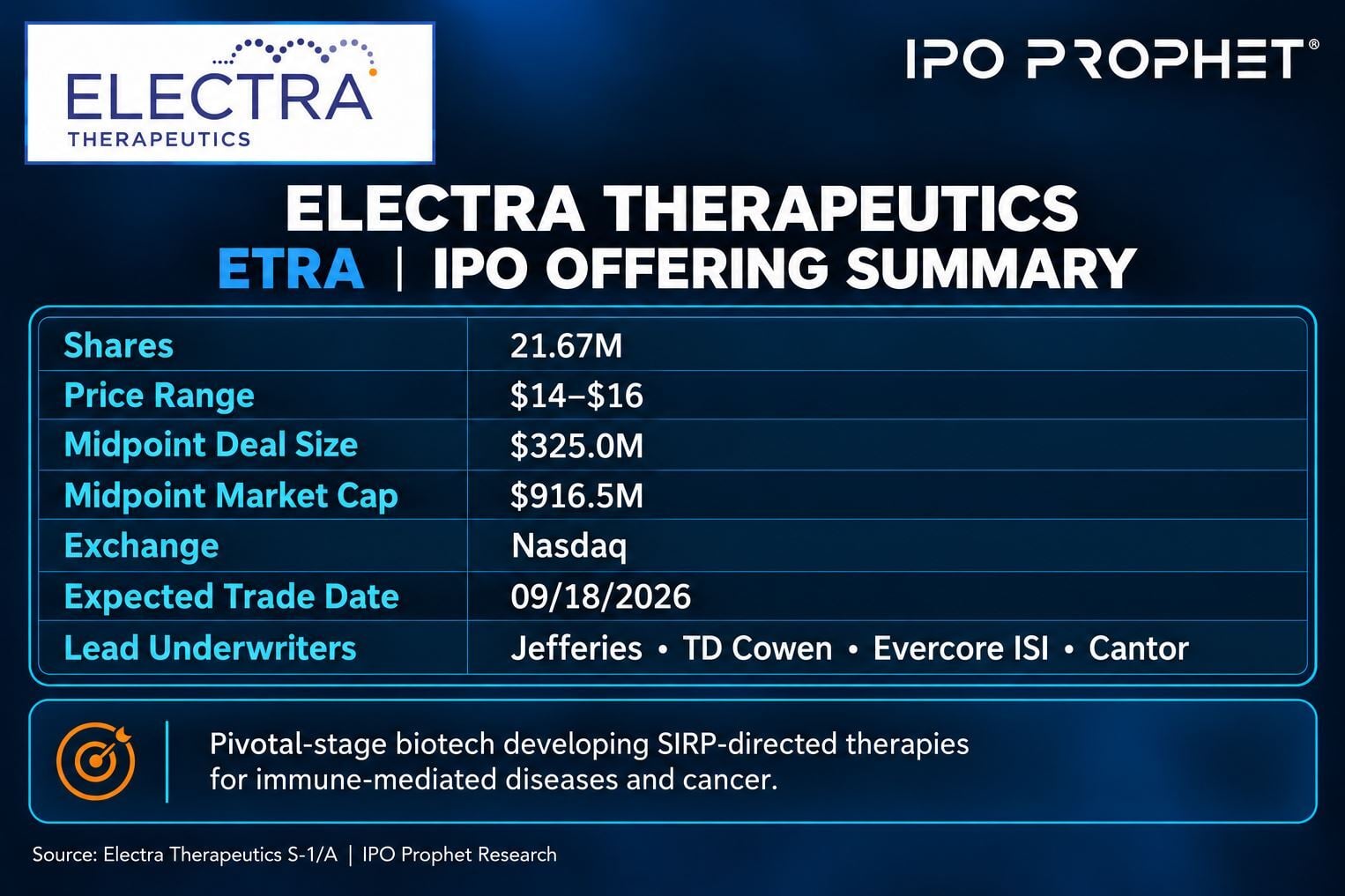
Electra Therapeutics, Inc. (ETRA) is preparing to sell approximately 21.67 million shares of common stock on the Nasdaq Global Select Market at an expected price of $14.00 to $16.00 per share. At the $15.00 midpoint, the offering would raise approximately $325.0 million and value the clinical-stage biotechnology company at roughly $916.5 million. Jefferies, TD Cowen, Evercore ISI and Cantor are serving as joint book-running managers. The shares are expected to begin trading on Friday, September 18, 2026.
Based in South San Francisco, Electra is developing precision medicines designed to selectively eliminate disease-driving immune cells while preserving broader immune function. Its platform targets signal regulatory proteins, or SIRPs, found on activated myeloid cells and T cells. Electra believes this approach could treat serious immune-mediated diseases and cancers without the broad immune suppression associated with many existing therapies.
The company’s lead candidate is ipsoprubart, formerly known as ELA026, a monoclonal antibody targeting SIRPα, SIRPβ1 and SIRPγ. Its most advanced indication is secondary hemophagocytic lymphohistiocytosis, or sHLH, a rare and frequently fatal hyperinflammatory condition in which an uncontrolled immune response can cause organ failure and death.
Electra estimates that approximately 12,600 patients were diagnosed with sHLH in the United States during 2025. The diagnosed population grew at an estimated compound annual rate of 11.5% between 2021 and 2025, and the company projects that diagnosed incidence could reach approximately 17,500 patients in 2028 if that growth rate continues. Electra believes the actual patient population may be larger because sHLH can be misdiagnosed or remain undiagnosed.
There are currently no therapies approved for the broad treatment of sHLH and no established standard of care. Patients are commonly treated with combinations of corticosteroids, chemotherapy and cytokine inhibitors, many of which suppress the immune system broadly and are used off-label. Emapalumab, marketed as Gamifant by Swedish Orphan Biovitrum, is approved for certain forms of primary HLH and macrophage activation syndrome associated with Still’s disease but not for sHLH broadly.
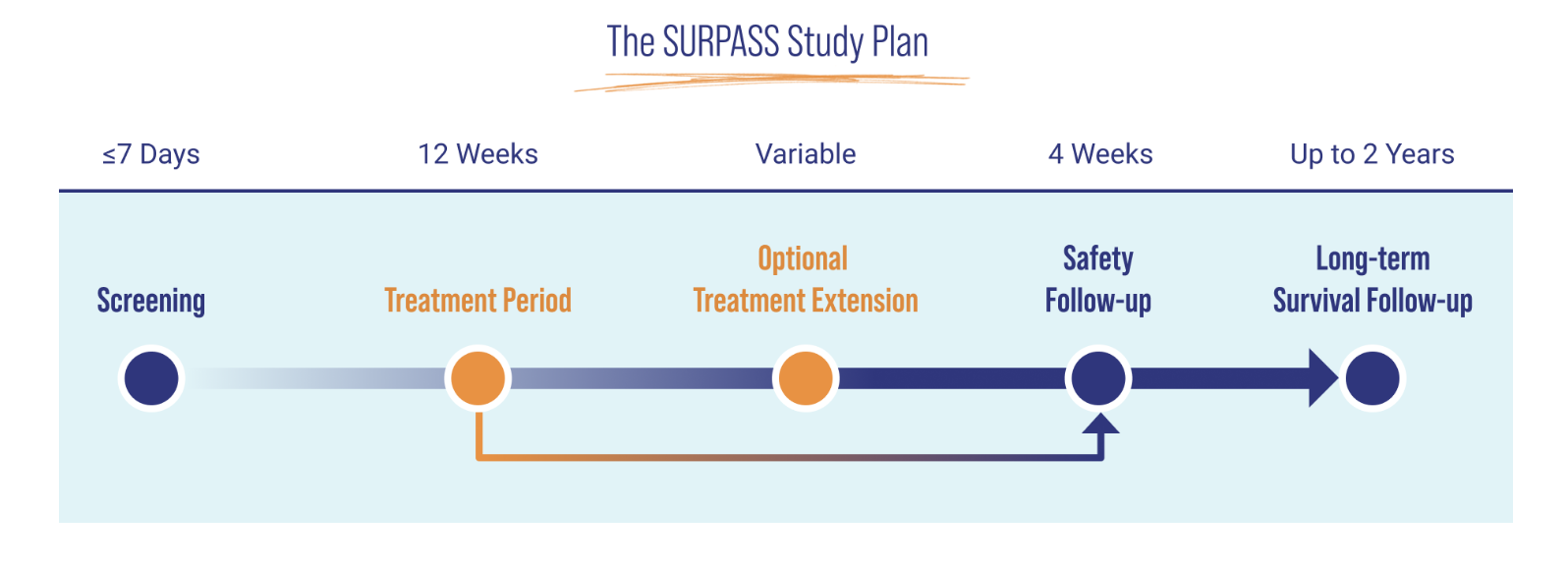
Ipsoprubart has received Breakthrough Therapy designation from the U.S. Food and Drug Administration and PRIME designation from the European Medicines Agency for the treatment of sHLH. Electra is evaluating the candidate through a global registrational program consisting of SURPASS, a Phase 2/3 trial, and COMPASS, a natural-history study intended to provide an external control group. The company expects to complete enrollment in the program during the second half of 2027.
SURPASS is an open-label, single-arm, multicenter trial enrolling newly diagnosed, treatment-naïve adult and pediatric patients with sHLH. Its primary cohort is expected to include as many as 70 patients with malignancy-associated HLH, including approximately 47 evaluable patients with lymphoma-associated HLH who will form the primary efficacy population. The trial is being conducted at approximately 30 sites across the United States and Europe.
The registrational program builds on results from a Phase 1b trial involving 22 patients with sHLH. Electra reported encouraging responses among newly diagnosed patients, including rapid improvements in disease-related biomarkers and organ function. The company also highlighted individual patients who achieved complete HLH responses following treatment, including one patient who experienced both a complete HLH response and a complete tumor response.
Ipsoprubart was generally well tolerated in the Phase 1 and Phase 1b programs. The most common treatment-related adverse events included infusion-related reactions, neutropenia and thrombocytopenia. The infusion reactions occurred primarily with initial doses and were generally managed with premedication and standard infusion procedures. Electra reported that no Grade 5 event in the Phase 1b trial was considered related to ipsoprubart by investigators.
The early evidence remains limited, and the pivotal trial carries meaningful clinical and regulatory risk. SURPASS does not include a concurrent randomized control group and will instead be compared with patients identified through the COMPASS natural-history study. Differences between the treated population and the external control group could complicate interpretation of the results. Electra also acknowledges that the registrational program was designed largely from data involving only 12 frontline patients with malignancy-associated sHLH in the earlier Phase 1b trial.
Beyond sHLH, Electra is studying ipsoprubart in a Phase 1 clinical trial involving patients with T-cell and natural killer-cell malignancies. Because the antibody is designed to deplete activated SIRP-expressing cells, the company believes ipsoprubart may be able to attack certain cancers directly while also treating the hyperinflammatory complications that can accompany them.
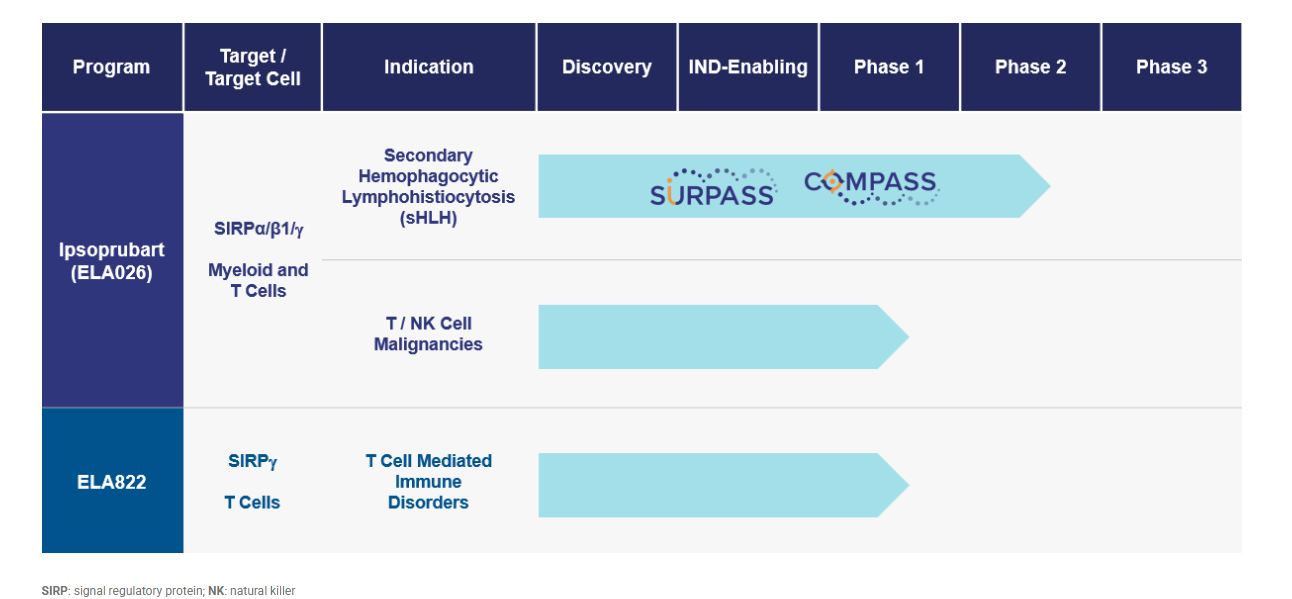
Electra’s second clinical candidate, ELA822, targets SIRPγ and is being developed for T-cell-mediated immune disorders. The company initiated a Phase 1 healthy-volunteer study in Europe after receiving regulatory clearance in August 2026. Electra plans to use the study’s safety, pharmacokinetic and pharmacodynamic results to select a dose for a future Phase 1/2 trial in patients with immune-mediated diseases.
Preclinical studies showed that ELA822 selectively depleted T cells and demonstrated greater than 90% subcutaneous bioavailability in nonhuman primates. If those findings translate to humans, subcutaneous administration could support more convenient outpatient treatment for patients with chronic immune and inflammatory diseases.
Like most development-stage biotechnology companies, Electra has no approved products and has never generated revenue. The company’s net loss widened to $62.0 million in 2025 from $24.8 million in 2024 as research and development activity increased. During the first six months of 2026, Electra recorded a net loss of $48.9 million, compared with $25.4 million during the same period in 2025.
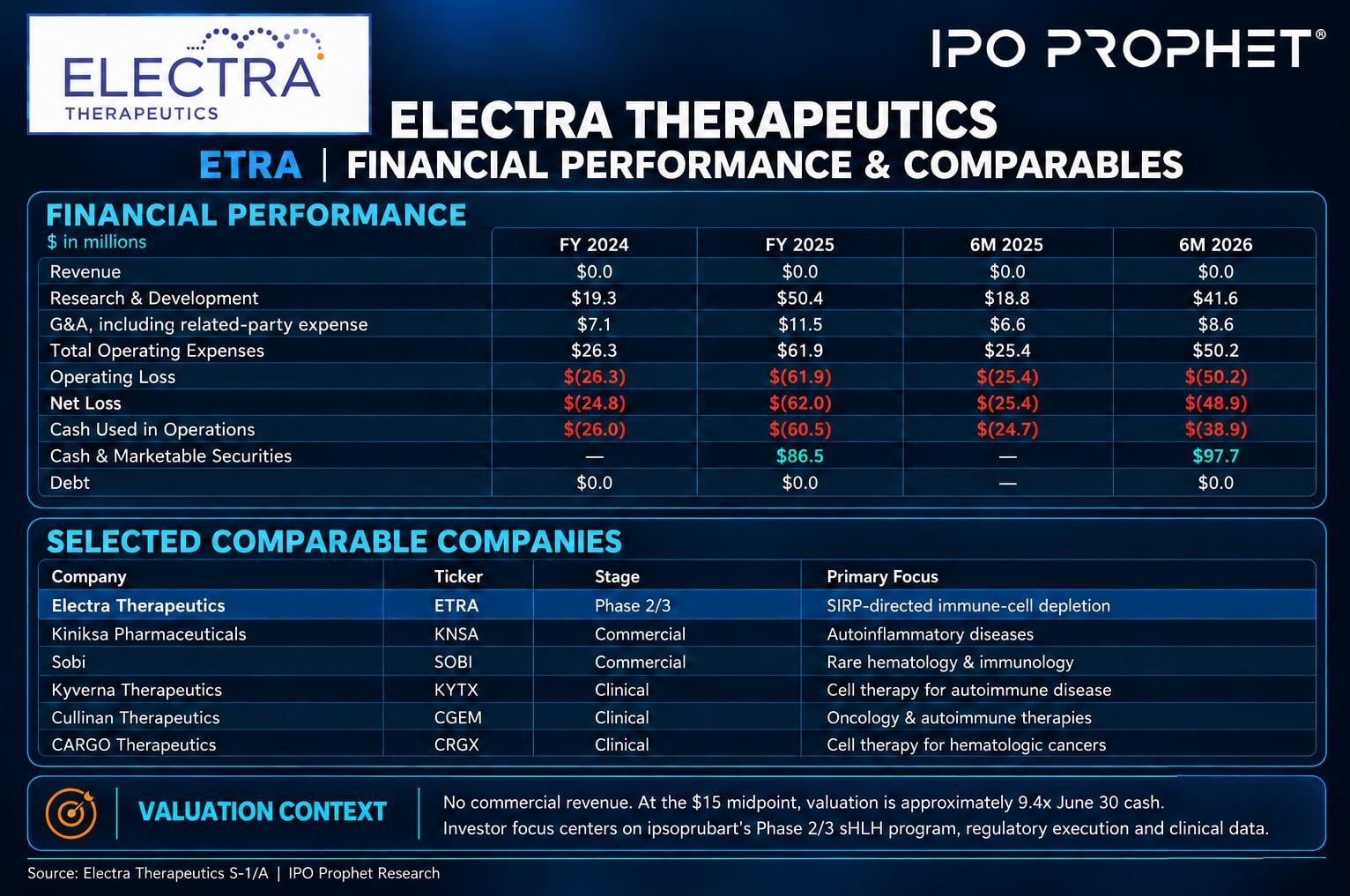
Research and development expense increased 162% to $50.4 million in 2025 from $19.3 million in 2024. That spending accelerated during the first half of 2026, rising to $41.6 million from $18.8 million a year earlier, primarily reflecting increased clinical, manufacturing and personnel costs associated with the ipsoprubart program.
General and administrative expense, including related-party expense, increased to approximately $11.5 million in 2025 from $7.1 million in 2024. During the first six months of 2026, those expenses totaled approximately $8.6 million, compared with $6.6 million during the prior-year period.
Cash used in operating activities increased to $60.5 million in 2025 from $26.0 million in 2024. Electra used another $38.9 million during the first six months of 2026, compared with $24.7 million in the corresponding period of 2025.
Electra held approximately $97.7 million in cash, cash equivalents and marketable securities as of June 30, 2026, following a $49.9 million second closing of its Series C financing. Without the IPO proceeds, management concluded that its existing resources would not be sufficient to fund operations for the following 12 months, creating substantial doubt about the company’s ability to continue as a going concern.
After accounting for estimated underwriting discounts, commissions and offering expenses, Electra expects to hold approximately $394.3 million in cash, cash equivalents and marketable securities on a pro forma adjusted basis. The additional capital is expected to provide the company with substantially more time to advance its clinical programs, although continued losses and additional financing requirements remain likely.
Electra intends to use the IPO proceeds and its existing cash primarily to carry ipsoprubart through topline results from the SURPASS and COMPASS registrational program, support a potential Biologics License Application and prepare for commercialization. Additional proceeds will fund the Phase 1 oncology trial of ipsoprubart, the development of ELA822, other research programs, working capital and general corporate purposes.
The company has attracted several prominent biotechnology investors. Its pre-IPO stockholders include OrbiMed, Westlake BioPartners, Redmile Group, New Leaf Venture Partners and Sanofi. Sanofi participated in Electra’s Series C financing and holds certain information and participation rights involving the company’s clinical programs and potential strategic transactions.
Electra enters the public market with several qualities that could attract biotechnology investors: a lead program already in a registrational trial, encouraging early clinical evidence, Breakthrough Therapy designation and support from well-known healthcare investors. The IPO is also large enough to provide meaningful funding for the company’s clinical and regulatory plans.
Those strengths are balanced by a small early-stage clinical dataset, the regulatory uncertainty created by the external-control trial design and rapidly increasing research spending. At approximately $916.5 million at the midpoint, Electra’s valuation places substantial weight on successful execution of the ipsoprubart program and its potential to become the first broadly approved therapy for sHLH.